



Fix Android Touch Problem – 21 Proven Solutions to Restore Touchscreen
By Minal Hossan
Start a successful print on demand business with proven tips on niche selection, store setup, SEO, and marketing.
 By Minal HossanPublished on June 03, 2026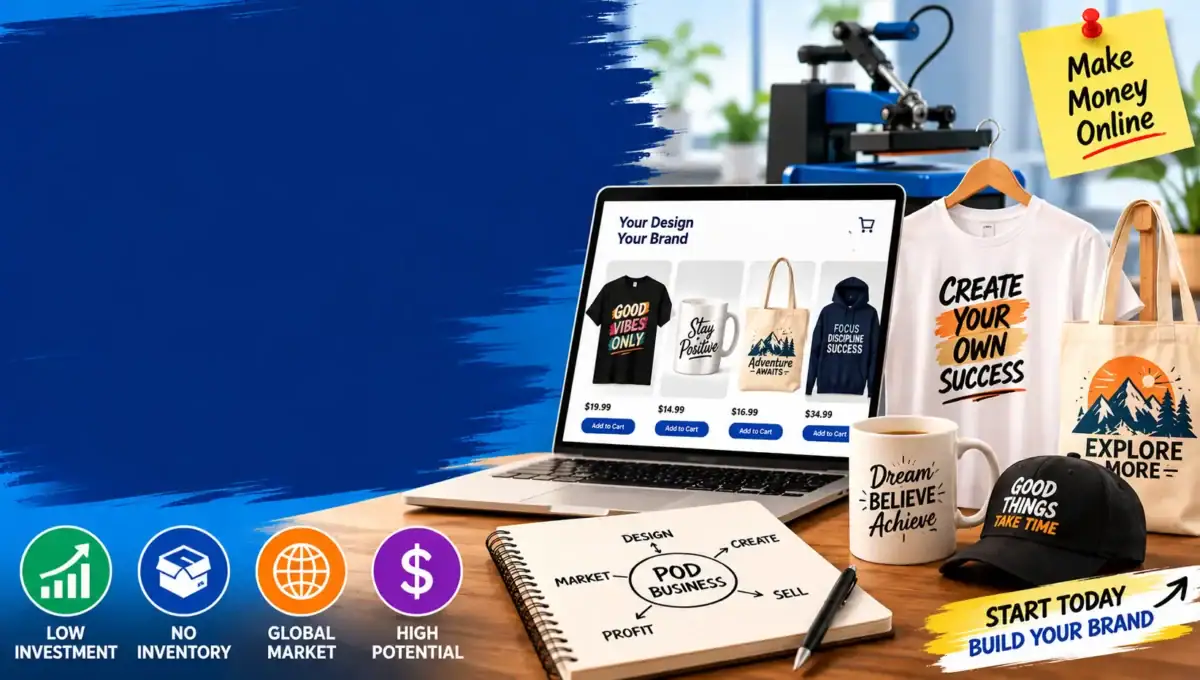
The print on demand business model has become one of the most popular ways to start an online business with minimal upfront investment. Unlike traditional eCommerce, print on demand (POD) allows entrepreneurs to sell custom-designed products without managing inventory, handling shipping, or investing heavily in stock.
As the global eCommerce market continues to grow, thousands of entrepreneurs are building profitable online stores through print on demand. Whether you are a student, freelancer, content creator, designer, or aspiring entrepreneur, a POD business can provide a flexible and scalable income stream.
This guide covers everything you need to know about starting, growing, and scaling a successful print on demand business in 2026.
Print on demand is an eCommerce business model where products are printed only after a customer places an order.
Instead of purchasing inventory in advance, you create designs and upload them to a POD platform. When someone buys a product, the POD supplier prints your design on the item and ships it directly to the customer.
Common POD products include:
This model eliminates the need for inventory storage and significantly reduces financial risk.
The process is straightforward:
You create unique graphics, text-based designs, illustrations, or AI-assisted artwork.
Upload the designs to a print-on-demand platform.
Integrate the POD service with an online store.
Customers purchase products from your website.
The POD provider prints the item and ships it directly to the customer.
You keep the difference between the selling price and production cost.
Traditional businesses often require significant investment in inventory. POD eliminates this requirement.
You don’t need warehouses or storage space.
You can operate from anywhere with an internet connection.
Add new products and designs whenever you want.
A successful design can generate sales continuously without additional effort.
Products are manufactured only after purchase.
Most POD processes are automated.
You can sell products worldwide.
Design products around virtually any niche.
No prior business experience is required.
While POD offers many benefits, it also has limitations.
Manufacturing costs are generally higher than bulk purchasing.
Popular niches can become crowded.
Production and shipping times vary.
Since products are produced by third-party suppliers, quality can vary.
Understanding these challenges helps set realistic expectations.
Selecting the right niche is one of the most important decisions in your POD journey.
Pet owners frequently buy customized products.
Gym enthusiasts enjoy motivational apparel.
Gaming communities support unique merchandise.
Programmers and tech enthusiasts often purchase niche-themed products.
Travel lovers appreciate destination-themed designs.
Teachers and students represent large target markets.
Instead of targeting “fitness,” consider “powerlifting enthusiasts.”
Instead of “dogs,” target “golden retriever owners.”
Specific niches often convert better.
T-shirts remain the most popular POD product.
Higher selling prices can increase profits.
Affordable and suitable for gift purchases.
Low-cost products with strong demand.
Large market due to smartphone adoption.
Popular among students and home decorators.
Growing demand driven by sustainability trends.
Successful POD businesses focus on solving emotional needs.
Humor often performs well.
Motivational content appeals to many audiences.
Teachers, nurses, programmers, and engineers frequently purchase profession-themed merchandise.
Fishing, gaming, photography, and fitness niches remain popular.
Known for premium quality and broad product selection.
Offers competitive pricing through multiple suppliers.
Strong international production network.
Marketplace-focused platform.
Popular for graphic apparel.
Ideal for creators and influencers.
Massive customer base and strong organic traffic potential.
Popular options include:
Your store should include:
These pages improve trust and professionalism.
Search engine optimization can generate free traffic for years.
Target long-tail keywords such as:
Include primary keywords naturally.
Avoid copying supplier descriptions.
Use descriptive filenames and alt text.
Link related products and blog posts.
Blogging supports long-term SEO growth.
Focus on:
Publish useful articles regularly.
Partner with niche influencers.
Build an email list from day one.
Pinterest performs exceptionally well for POD businesses.
Short videos often generate significant organic reach.
Effective for niche targeting.
Excellent for visual products.
Growing rapidly in popularity.
Ideal for purchase-intent traffic.
Start with small budgets and test multiple creatives.
Highly competitive niches are harder to enter.
More quality designs generally mean more opportunities.
Organic traffic can significantly reduce advertising costs.
Success usually requires consistent effort.
Unique branding creates sustainable growth.
Income varies significantly.
$50–$500 per month
$500–$5,000 per month
$5,000–$50,000+ per month
Results depend on niche selection, product quality, marketing, and consistency.
Several trends are shaping the future of POD:
Businesses that adapt to these trends will have greater opportunities for growth.
A print on demand business remains one of the most accessible ways to start an online venture in 2026. With low startup costs, minimal risk, and scalable opportunities, POD offers an attractive path for entrepreneurs looking to build an online income stream.
Success requires more than simply uploading designs. The most profitable POD businesses focus on niche selection, quality design creation, SEO, branding, and consistent marketing.
If you commit to learning, testing, and improving over time, a print on demand business can evolve from a side project into a sustainable and profitable online brand.